 English
 Español
 Português
 русский
 français
 日本語
日本語 Deutsch
 Tiếng Việt
 Italiano
 Nederlands
 ไทย
ไทย Polski
 한국어
한국어 Svenska
 magyar
 Malay
Malay বাংলা
বাংলা Dansk
Dansk Suomi
Suomi हिन्दी
 Pilipino
 Türk
Türk Gaeilge
 عربى
عربى Indonesia
 norsk
norsk Burmese
 български
 ລາວ
ລາວ Latine
 Қазақ
Қазақ Euskal
 Azərbaycan
 slovenský
 Македонски
 Română
 Slovenski
 Српски
 Afrikaans
 Беларус
 Hrvatski
 Монгол хэл
 Zulu
Zulu Somali
 O'zbek
 Hawaiian
ORIENT IPM Drive Optocoupler Product Introduction
ORIENT IPM Drive Optocoupler Product Introduction
Ray Wang [email protected] www.orient-opto.com
1,IPM Introduction:
IPM is the abbreviation of intelligent Power Module, using power switching device IGBT (insulated gate bipolar transistor), with GTR(high power transistor) high current density, low saturation voltage and high voltage resistance advantages, And MOSFET(field effect transistor) has the advantages of high input impedance, high switching frequency and low drive power. IPM integrates logic, control, detection and protection circuits, easy to use, not only reduces the size of the system and development time, but also greatly enhances the reliability of the system, and ADAPTS to the development direction of today's power devices - modular, composite and power integrated circuit (PIC), which is more and more widely used in the field of power electronics.
2,ORIENT IPM drive optocoupler introduction:
ORIENT IPM drive optocoupler contains an AlGaAs LED and a photodetector with a built-in Schmidt trigger to provide logically-compatible waveforms without additional waveform shaping. The Totem pole output eliminates the need for pull-up resistors and allows direct drive of smart power modules (IPM) or gate drives (IGBTs).
3,General application scenarios of ORIENT IPM drive optocoupler:
1), IPM interface isolation
2), Isolation IGBT/MOSFET grid driver
3), AC and brushless DC motor drivers
4), Industrial inverter
5), Universal digital isolation
4, Interpretation of ORIENT IPM drive optocoupler electrical parameters:
1), Forward working voltage-VF: refers to the voltage drop of the LED itself at a given working current;
2), Reverse voltage-VR: refers to the LED withstand the maximum reverse voltage, more than this reverse voltage, may damage the LED;
3), Input threshold current-IFLH: refers to the optocoupler input trigger current, reach this current, the optocoupler can be normally switched on;
4), Closing threshold voltage-VFHL: refers to the optocoupler input closed threshold voltage, below this voltage, the optocoupler closed does not work;
5), High level output current-IOSH: refers to the output high power level, the output port VO can output the maximum current;
6), Low level output current-IOSL: refers to the output low power level, the output port VO can flow into the maximum current;
7), High level power supply current-ICCH: refers to the output no-load, and output high voltage, the power supply PT current, its size marks the size of the device static power consumption;
8), Low level power supply current-ICCL: refers to the output no-load, and output low voltage, the power supply PT current, its size marks the size of the device static power consumption;
9), High level output voltage-VOH: refers to the voltage value of the output port VO at high power level;
5, Typical models of ORIENT IPM drive optocoupler:
The current ORIENT IPM driver optocoupler covers the package shape: SO6, SOP5
| SOP6 Package | OR-480 |
| SOP5 Package | OR-M480 |
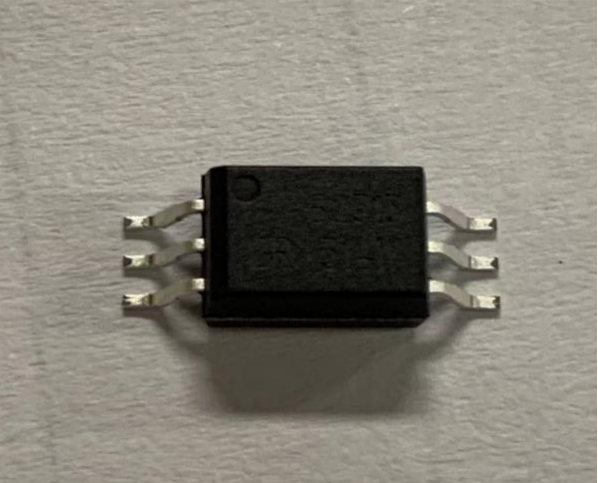
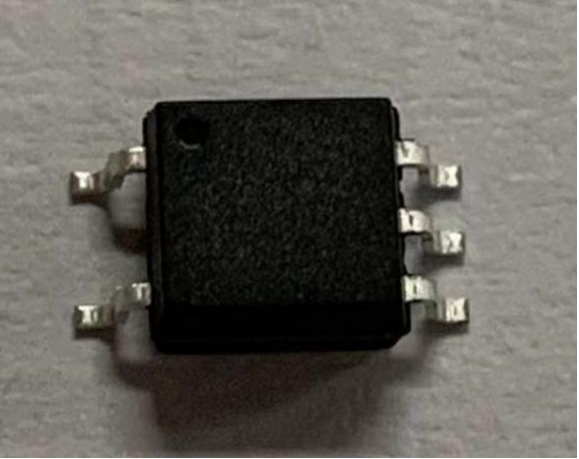
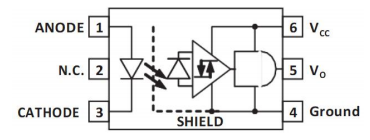
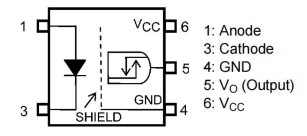
SOP6 Package SOP5 Package
6, Typical application circuit of ORIENT IPM drive optocoupler:
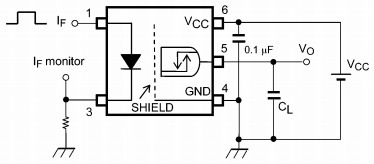
The circuit application diagram is from TLP2355 specification
1), Input switch signal at the IR end of the primary side. IF the working current is generally recommended to use 6mA-10mA.
2), The recommended power supply voltage for the VCC side is 4.5V-20V.
3), Connect a 0.1uf bypass capacitor between the VCC end and the VEE end on the secondary side.
4), The sub-side VO output can directly drive the intelligent power module (IPM).
Ray Wang [email protected] www.orient-opto.com
What Optocoupler Is Suitable for Industrial Control Isolation Circuits?
Wondering what optocoupler fits industrial control isolation circuits? Learn key selection parameters, domestic optocoupler advantages and pin to pin replacement tips for PLC and automation hardware design.
Read MoreWhat Points Should Be Noted for Pin to Pin Replacement of Domestic Optocouplers?
Wondering about key considerations for pin to pin domestic optocoupler replacement? Shenzhen Orient Components Co., Ltd. shares tips on optocoupler localization. Check electrical specs, packaging and certifications, and run full tests for stable electronic component replacement.
Read MoreHow to Choose Reliable Suppliers of Shenzhen Electronic Components?
Wondering how to choose reliable suppliers of Shenzhen electronic components? This article analyzes the industrial advantages of Shenzhen electronic components, and shares key selection tips on product quality, delivery cycle and technical support, providing professional procurement references for global industrial and consumer electronics buyers.
Read More